

Introduction
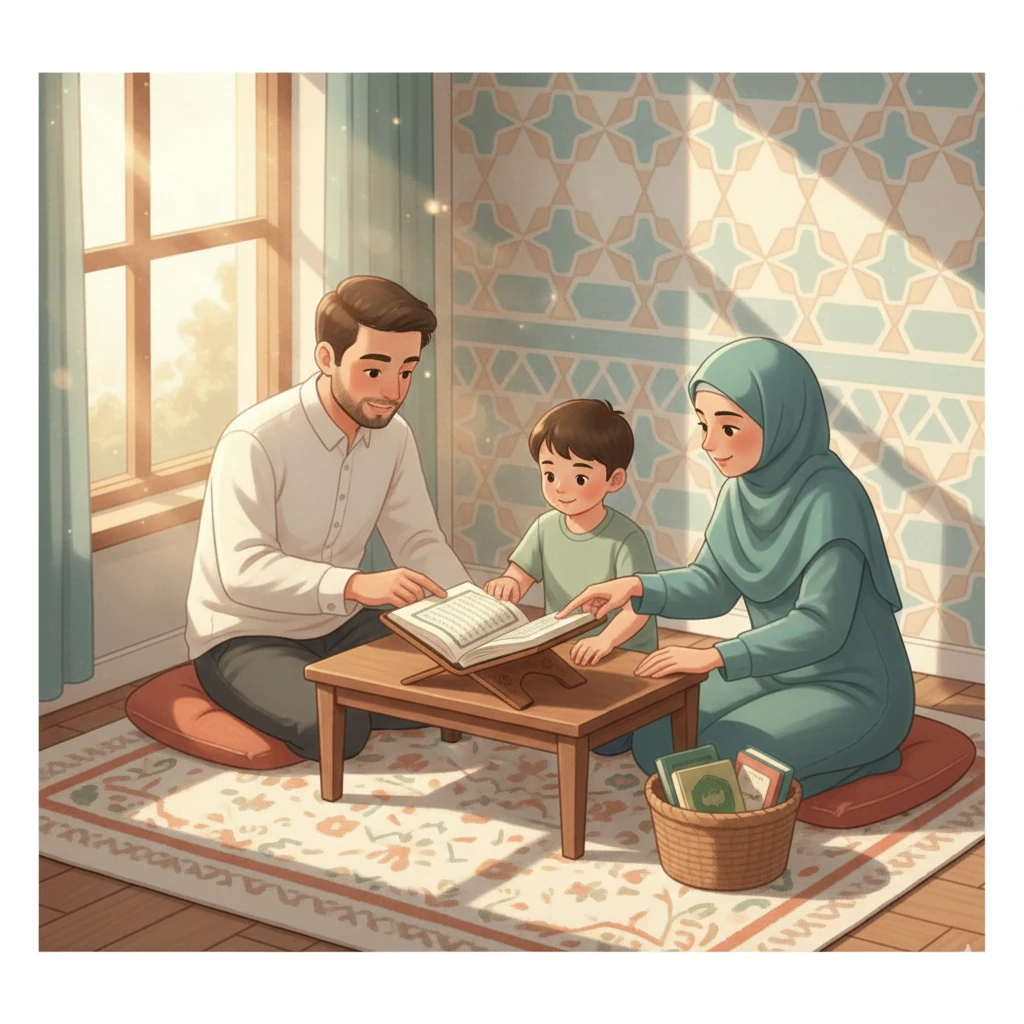
The parents desire their children to have Quran in their hearts. That is made possible by a sedate and consistent routine. This paper demonstrates how to make a best, easy, and green Quran routine with children that fits their hectic family schedule and honors a child when it comes to pace.
The relevance of having a daily Quran routine.
A routine does not just teach words. It develops devotional practices spiritual trust as well as reverence to the Quran. Little repeated activities, such as listening to recitation, following the letters or memorisation of a few ayahs form the association of the child with the book. These little acts are cumulative at long last.
Begin with the kid and not the clock.

All children learn in different ways. There are those who are active in the morning; and those who after taking a nap settle down. Correspond the daily Quran schedule of children to the natural rhythm of the child:
- Note the times when they are relaxed and focused.
- Starting with low keep time, which can be five to ten minutes.
- Select a consistent moment (when one has eaten before sleep, or after a nap) and ensure it is not harsh.
This will make learning a habit, rather than a task.
Basic every day organization (sample).
This is a small realistic plan that you can make:
- Warm-up (1-2 minutes): soft recitation or listening whilst cuddling.
- Main activity (5-8 minutes): Practice one of the letters, revise a piece of short surah, or repeat a memorized ayah.
- Wrap-up (1-2 minutes): Compliments, dua and a note of encouragement on the next day.
This template keeps the routine short and positive. It also gives parents a clear repeatable format to follow.
Mix learning activities to keep interest alive
Variety keeps children engaged. Rotate these small activities across the week:
- Listening & recitation: Play a short surah or reciter your child loves.
- Tajweed basics: Gentle focus on one sound or rule.
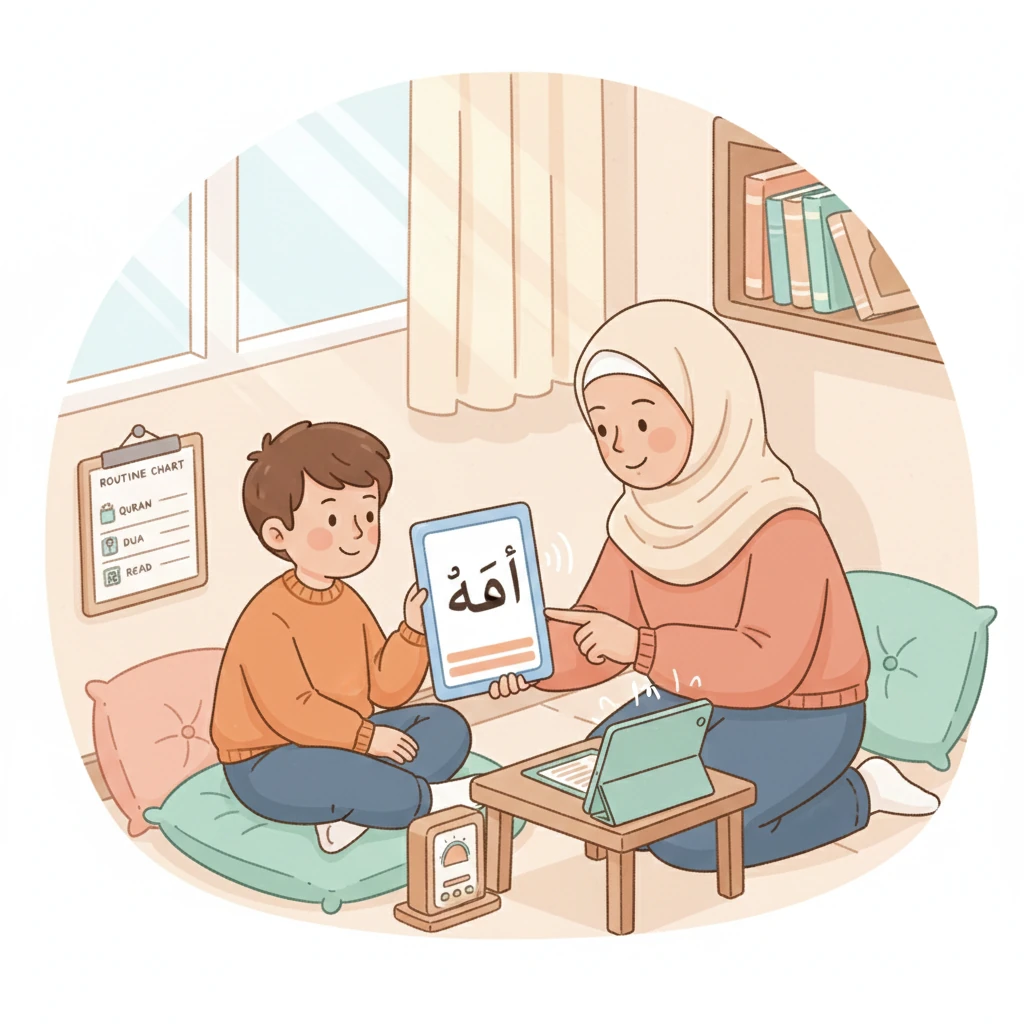
- Flashcards & tracing: Make letters and words playful.
- Storytime: Share a short story from the Quran or about a prophet linked to the ayah.
- Memorization practice: One short ayah at a time, with plenty of review.
Each element supports the Quran learning habits for kids: listening, repeating, understanding, and loving.
Create a welcoming learning space
Make the Quran accessible and inviting:
- Keep a small Quran basket with the mushaf, a kids Quran, flashcards, and a notebook.
- Use soft cushions and a quiet corner.
- Let children choose a favorite reciter or surah when appropriate.
When the space feels warm and personal, children associate learning with comfort.
Use encouragement, not pressure
Display more praise than result. You can say things such as, I saw how attentively you were trying that sound or you remembered that ayah so well today. Reward minor successes with stickers, smile or a brief dua. This creates the confidence and makes children regard the Quran as something to be happy about.
There should be no comparisons and severe correction. Correction should be mild with instant rewards building morale.
When times are tough: adjust, not give up.
Every child will have off days. If your child resists:
- Switch to listening instead of reading.
- Write a brief story of the meaning of the verse.
- Even reduce the duration of the session.
- Choices about offers: “Would you like to listen or trace letters today?
These adaptations keep the routine to life and do not interfere with the emotional needs of the child.
Parental role: exemplary and contribute.
Children learn most by watching. When they see you read, listen, or reflect on the Quran, they are far more likely to follow. Simple actions help:
- Read aloud together for a few minutes.
- Share what a verse means in a few simple words.
- Make dua together after the session.
Your consistency and calm presence matter as much as the lesson itself.
Track progress kindly and clearly
Keep a gentle record-a small chart, a notebook, or a voice note. Track tiny goals: a new letter learned, a surah reviewed, or a memorized ayah. Tracking helps parents see steady growth and lets children feel proud.
Avoid turning tracking into pressure. The goal is compassion and continuity, not perfection.
Pactical tips for busy families
- Micro-sessions: If time is tight, two 3–4 minute sessions work better than a forced 20-minute session.
- Use travel time: Play short recitations in the car.
- Involve siblings: Older siblings can help younger ones read or listen.
- Tech wisely: Use apps or audio for high-quality recitation but balance screen time with physical mushaf practice.
These simple shifts make a kids Quran study plan fit real life.
Cultural and global sensitivity
Families around the world approach Quran learning differently. Respect local practices while keeping the child’s well-being central. Avoid heavy doctrinal instructions; focus on love, language, and habit. This keeps the routine inclusive and suitable for a worldwide audience.
FAQS
Begin with long sessions, short and manageable ones are advisable and maintain the schedule at any one point in a day. Children are motivated by a relaxed atmosphere, positive promotion, and by celebrating minor accomplishments.
A basic form of Arabic letters and sounds may be used with children as early as age 4-5. Nevertheless, all children learn at their own pace, it is best to concentrate on the interest and being ready but not because of age.
Reading, listening, powered by stories, and summaries are advised. The idea of adding visuals, charts, or little activities is an element that is used to keep the focus of interest and avoid boredom.
Anytime take a break, make it easier and make the learning enjoyable. Taking a break, motivating, and being patient will create confidence in the long run.
Yes. The main advantage even 5-10 minutes per day is good. RegularlyAmericans prefer to fit your family schedule, like after Fajr or before sleeping or after school and this way will facilitate consistency easier.