

Introduction
Every parent wants to know their child is truly growing through their Quran studies-spiritually, academically, emotionally. And with online classes becoming the norm, it’s natural to wonder, “Are they actually improving?”
You don’t need complicated systems to track Quran learning progress; sometimes the simplest observations tell you far more than charts ever could.
I’ve seen this with parents who tell me, “I heard him read Surah Al-Fatihah today and it sounded… different.” That moment of noticing? It matters more than you think.
Why Tracking Quran Learning Progress Matters
When you keep an eye on your child’s development, it’s really about reassurance-for you and them. Kids feel calmer when they sense their parents noticing the small, everyday wins. And honestly, those tiny wins are often what build deep love for learning Quran
I once watched a mother quietly nod along as her daughter recited a verse she’d struggled with for weeks. No big celebration, no testing-just a gentle smile. The girl lit up. That’s the kind of “tracking” that stays with a child.
(Some parents underestimate how far a simple “you sounded beautiful today” can go.)
Clear Signs Your Child Is Progressing
Improved Recitation Accuracy & Tajweed
You’ll usually hear the progress before you see it. A letter that was once rough becomes smoother, or a rule they kept forgetting suddenly lands. Kids don’t always announce their improvements-but you’ll notice the subtle confidence in their voice.
A father once said to me, “He didn’t stumble on the same verse today.” That one sentence said everything.

Stronger Memorization & Retention
If your child recalls a Surah they learned weeks ago with fewer pauses or more flow, they’re on the right track. Some memorize like a slow, steady river; others like a quick flash that needs more revisiting. Both are completely fine (and honestly, quite normal).
Increased Engagement & Discipline
A child who sits down for class without being asked twice? That’s progress. A child who asks, “Can I read this part again?” That’s progress too. Engagement is often the first, quiet sign of growth.
Practical Ways to Track Progress at Home
Weekly Recitation Check-ins
Set aside five minutes a week-nothing formal. Maybe after dinner or right before bedtime. Just listen. You’ll be surprised how those few minutes make patterns visible.
One parent told me she listens while folding laundry. Not glamorous, but it works.
Simple Progress Journal or Checklist
A small notebook, a phone note, even a sticky note works. Jot down: Surahs practiced, Tajweed rules attempted, moments of confidence (or struggle). Over time, the scribbles form a story.
It doesn’t need to be pretty. It just needs to be honest.
Using Digital Tools or Apps
A light touch of tech helps some families. Audio recordings, gentle revision reminders, or “trackers” built into Quran apps can support consistency. Think of them as little helpers-not pressure tools.
Working with the Online Quran Teacher
Requesting Regular Feedback
Should I listen to the recitation of my child frequently?
Even a brief check-in, monthly or once in six weeks, is a long way. Educationalists do tend to like parents who are not intrusive, but remain interested. Discuss strong points, aspects to overhaul, and the way that you can help revise at home.
One of my teachers has shared with me that she prefers that the parents inquire about what is working, rather than what is lacking.
Understanding the Teacher’s Strategy
Some teachers start with Tajweed foundations, while others prioritize fluency and comfort first.
Knowing the plan removes confusion. It also helps you set realistic expectations (and avoid comparing your child to someone else’s).
Simple Indicators You Can Trust
You don’t need special tools. Just watch for:
- fewer corrections
- smoother recitation
- steady weekly improvement
- a more relaxed reading tone
- tiny bursts of confidence
These small signals often tell a bigger story. And yes-sometimes a child improves even when they seem stuck.
Common Challenges Parents Face (and How to Handle Them)
Slow Memorization Phases
Kids slow down. Then speed up. Then slow down again. It’s part of the learning dance. Plateaus aren’t failures-they’re resting points.
Give them space, gentle revision, and calm encouragement. They’ll move again when they’re ready.
Difficulty Staying Focused Online
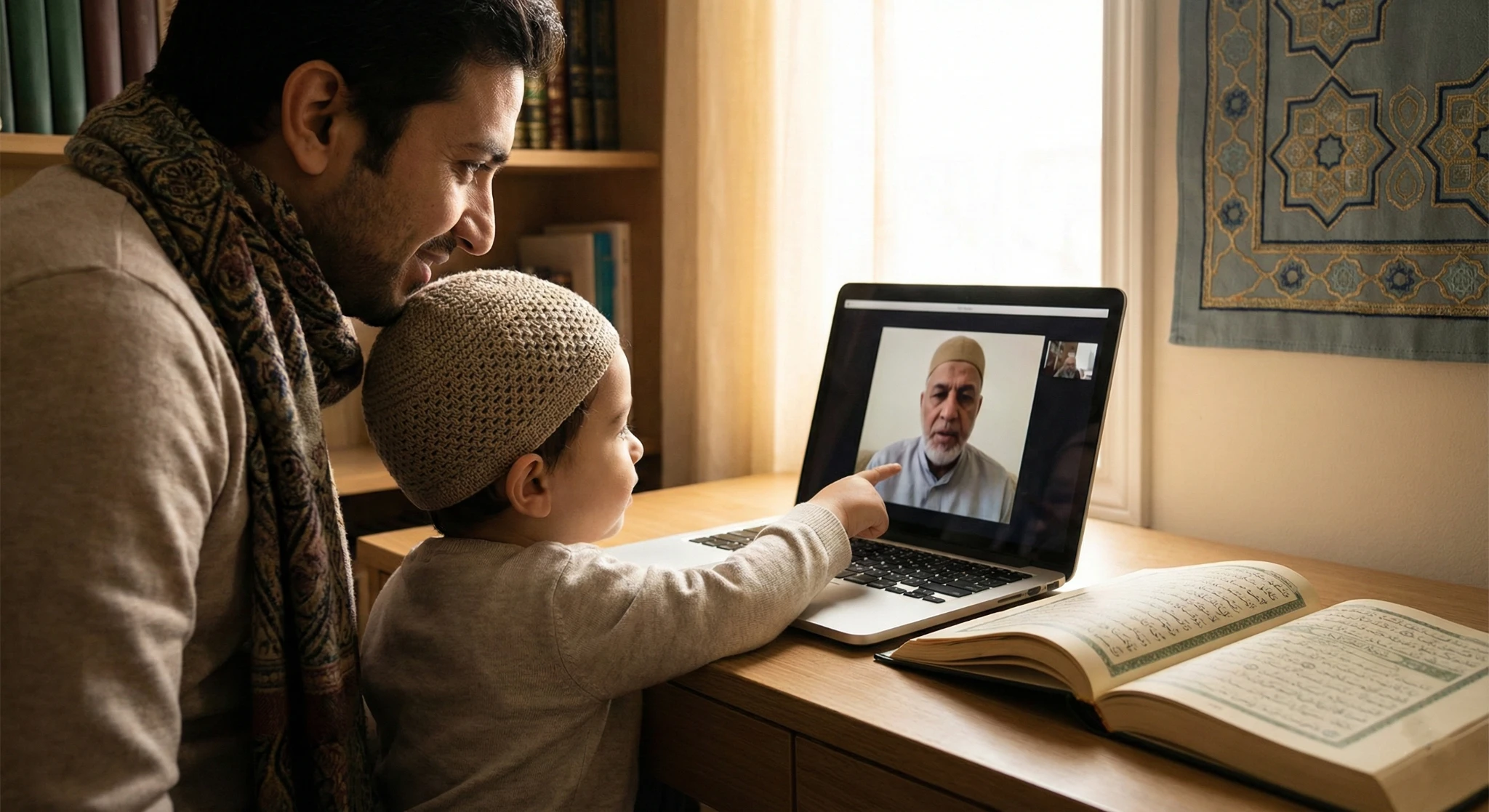
Some children struggle with screens (adults too). Try a clean desk, fewer distractions, a comfy seat, maybe even a small pre-class pep talk.
One parent gives her son a warm drink before class-she swears it helps him settle.
Supporting Growth Outside Class
Gentle Daily Revision Routine
Short sessions work best. Two minutes after prayer. A quick read while sitting together. No pressure, no marathon lessons. Just steady drops that fill the bucket.
Creating a Positive Environment
Kids learn better when the space feels peaceful. A tidy corner. A soft tone. Predictable timing.
You don’t need perfection-just a place where learning feels safe, not stressful.
Sometimes the “environment” is simply your presence.
When It Could be Time to Make a Change in the Plan
When your child often becomes overwhelmed, disconnected and unusually frustrated a little alteration-pace, time and style of teaching-should be considered. It is not in accusing the teacher or the child.
It is about discovering the rhythm which suits your child.
Each learner possesses an individual gear.
Conclusion: Heartwarming, Stable Learning of Quran
Following up on your child is not about quantifying him or her but knowing him or her. Through observing them kindly, communicating with them in a supportive manner and creating a non-hurried routine, you will be able to see them grow on a week-to-week basis.
And when you come to be confused, begin small. Listen to a verse, query one thing, rejoice over one thing.
They may be taught more by your presence and your encouragement than by anything that they could be taught.
FAQs
Weekly is great-short and relaxed.
Not at all. Slow memorization is incredibly common.
Have a brief conversation. Most teachers welcome questions.
Yes, when used lightly-audio recordings and reminders can help.
Take a gentle step back. Add small rewards, let them choose the Surah, or shorten sessions.