

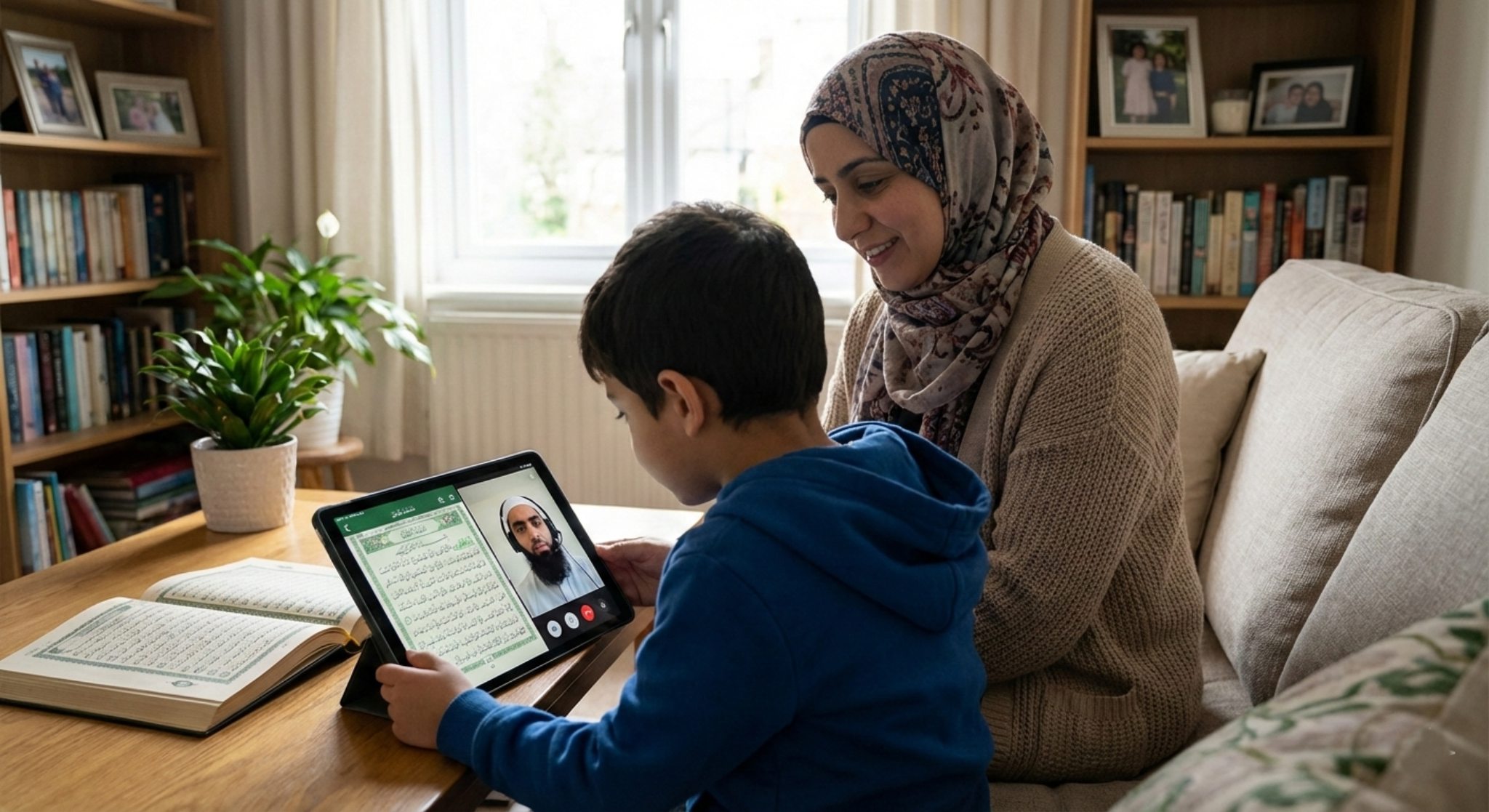
Choosing how your child learns the Quran isn’t just an educational decision. It’s personal. It touches faith, routine, trust-and sometimes even family peace.Most parents silently deliberate on two options that are likely to be similar, online education and in-housetutoring then question themselves, which of the two is likely to be a good fit to their child.
In the last several years, online classes with kids to study the Quran have gained much more popularity. Meanwhile, home tutors are also a well-known and favored option. Both can work. These do not work the same with all children–and therein, it is interesting.
The Reason to Select an Appropriate Quran Learning Process in children.
Children don’t only learn words and rules. They pick up feelings along the way-comfort, confidence, or sometimes pressure. When Quran learning feels calm and encouraging, children usually stay connected longer.
Many parents notice this early on. A child who enjoys lessons recites more willingly (sometimes even without being asked). A child who feels rushed? They may resist, quietly or loudly.
One mother once shared that her son memorized faster after switching methods-not because the teacher was “better,” but because the setting felt right for him. That small shift mattered more than she expected.
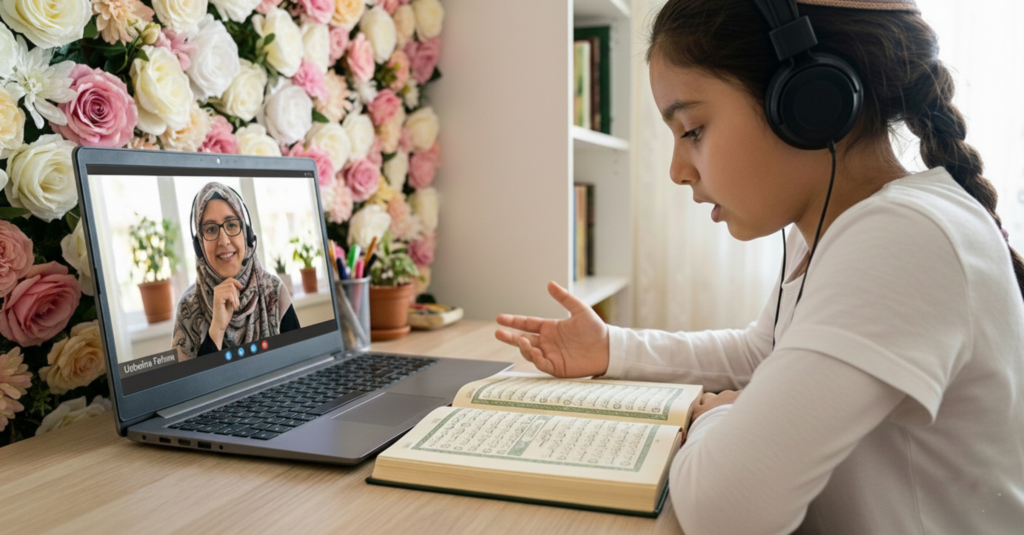
The Catechism of Online Quran Classes to Kids.
Online Quran classes are not recordings or applications on the autoplay, online classes involve live classes with the actual teachers. The teacher is a real time listener, corrective and responder. It remains individual, only now via a screen.
One-on-one programs or very small groups are offered in most of the programs. In the case of school-going children, this is important. The lessons can be effectively arranged between homework, dinner and bedtime (valued by the parents).
The online learning of the Quran has some of the following advantages to children.
Consistency is one of the apparent strengths. Classes are opened punctually, on schedule, and developed step-by-step. Children have an idea of what is about to happen next and such anticipation enables them to relax.
Parents often mention access to trained teachers as another plus. Especially for families living abroad, finding a qualified local teacher isn’t always easy. Online learning quietly solves that problem.
A father once joked that his daughter takes her online class more seriously than her school Zoom calls. Why? Because it’s short, focused, and the teacher actually listens.
Common Concerns Parents Have About Online Classes
Screen time is usually the first concern. It’s fair. But most Quran sessions are brief-often 25 to 30 minutes-and highly interactive.
Good teachers don’t lecture endlessly. They listen, repeat, correct gently, and keep the child involved. When parents sit nearby (especially in the beginning), children tend to stay focused and confident.
What Does a Home Quran Tutor Offer?
A home Quran tutor teaches in person, inside the family home. For many parents, this feels natural. It’s how they learned themselves.
Younger children, especially, may feel more relaxed at first with someone physically present. There’s comfort in familiarity-no devices, no logins, no headphones slipping off mid-lesson.
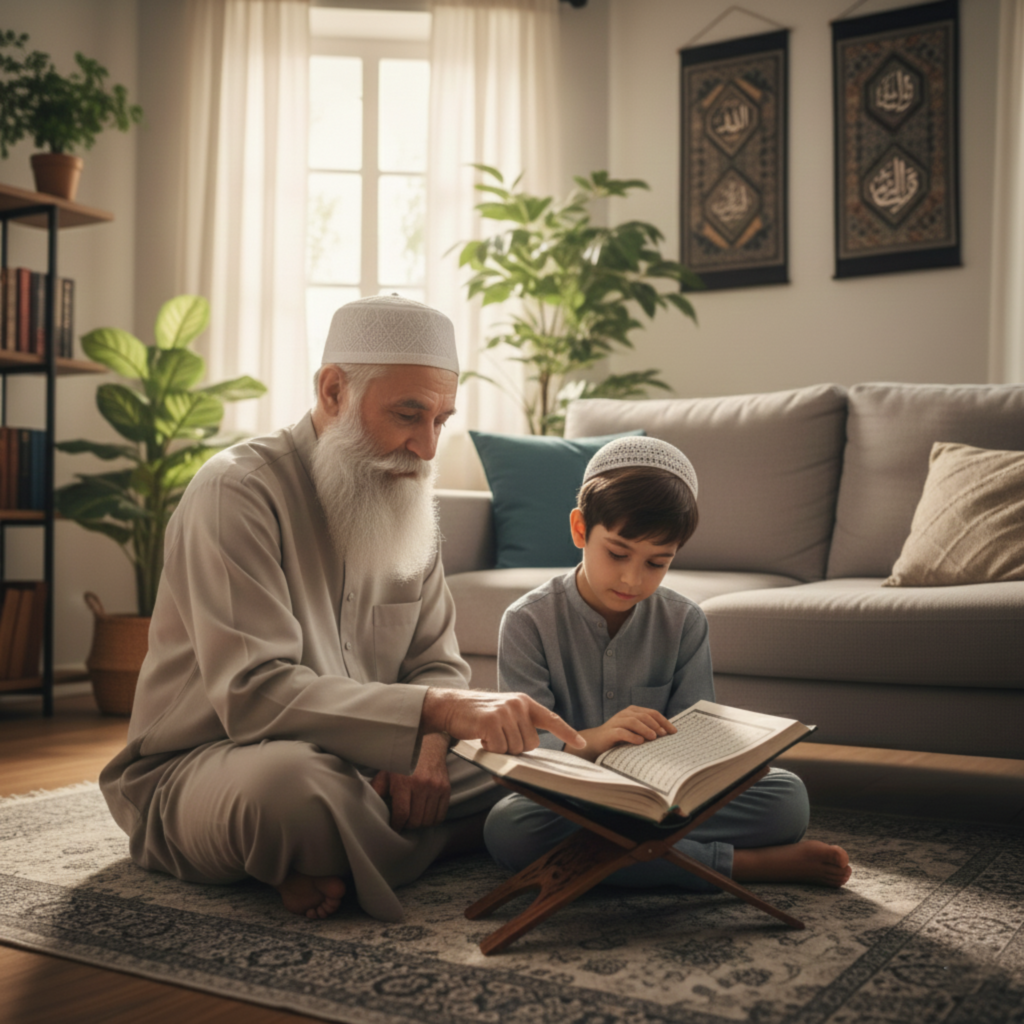
Advantages of Quran Classes at Home
Home learning avoids technical issues altogether. No internet dropouts, no camera adjustments.
Parents also like seeing lessons happen in front of them. One mother mentioned she felt reassured simply hearing the recitation from the next room. That sense of closeness matters to some families.
Limitations of Home Quran Tutors
Consistency can be tricky. Tutors may arrive late, reschedule often, or stop unexpectedly. Over time, this breaks momentum (and kids notice).
Teaching quality can also vary. Not every tutor follows structured Tajweed methods, and progress tracking is usually informal. For parents unfamiliar with Tajweed rules, it’s not always easy to judge accuracy.
Online Quran Classes vs. Home Tutors: A Practical Comparison
Instead of asking which option is “better,” it helps to ask which one fits your child-and your household-right now.
Flexibility and Scheduling
Online Quran learning for children fits modern routines well. Classes can shift around school schedules, exams, or family travel.
Home tutors usually work on fixed timings. When routines change (and they always do), flexibility becomes harder to manage.
Safety, Supervision, and Parental Peace of Mind
Online sessions are easy to observe. Parents can sit nearby, check progress reports, or speak with coordinators when needed.
With home tutors, trust is built personally. Some families are very comfortable with this. Others prefer the transparency of a structured system.
Teaching Quality and Tajweed Accuracy
Many online programs emphasize Tajweed from the start. Teachers are trained to listen closely and correct without discouraging the child.
That doesn’t mean home tutors lack skill-many are excellent. But quality varies, and consistency depends heavily on the individual.
Cost and Value for Families
Online classes often include curriculum support, progress tracking, and teacher replacement if needed. That adds long-term value.
Home tutoring costs can increase over time, especially when sessions are missed or extended. Parents usually feel this difference after a few months.
Which Option Is Better for Your Child? Key Factors to Consider
Every child is different. Some love structure. Others need warmth and familiarity first.
Ask yourself a few simple questions:
- Does my child respond better to routine or personal presence?
- Can we maintain consistent supervision?
- What feels sustainable for our family?
Sometimes the answer becomes clear once you watch your child learn-even for a week or two.
Why Many Parents Are Choosing Online Quran Classes for Kids Today
Parents across different countries are leaning toward online learning for practical reasons. It reduces daily stress and keeps learning steady.
Children often enjoy the independence too. Logging in, greeting their teacher, finishing a lesson-it builds quiet confidence. Minor things, yet significant ones.
Conclusion: Conclusion of Finding a Bold Faith Decision.
Interests of a child to the Quran can be instructed by both online classes and home tutor. It is best to be gentle, regular, and on the right track.
When a child is not pushed up, but encouraged (not in a hurry), he develops gradually in both ability and recitation affection. Select what will make your family remain calm, devoted, and focused.
In case you are also not sure, you can just begin with a small test. In some cases, it is enough to see the smile of your child in the course of a lesson.
FAQs
Yes. With short sessions and patient teachers, many young children adapt surprisingly well.
Most programs allow full visibility. Parents can listen in or review progress updates.
Structured programs often focus carefully on pronunciation and gradual Tajweed learning.
Some beginners do well at home, others online. It depends on the child’s comfort and attention style.
Good teachers adjust pace and style. Short lessons and parental presence usually help.