


Helping a child connect with the Quran isn’t really about schedules or checklists. It’s about feelings.This will be perceived by most parents early and early, kids will react more to how something feels as opposed to why it matters. It is why the best method to make kids study Quran is by being warm, patient, and constantly encouraging rather than forcing.
Children can forget specific information, but they can remember intonation. They remember whether learning felt call- or tense. That memory stays.
Understanding Why Love Matters in Quran Learning
Kids open up when they feel safe. If Quran time feels rushed or heavy, many children shut down quietly (sometimes without saying a word).
A parent once shared how her son memorized faster after she stopped correcting every mistake mid-recitation. She simply listened, smiled, and corrected later. Small shift. Big difference. Love lowers fear, and fear is often the real blocker.
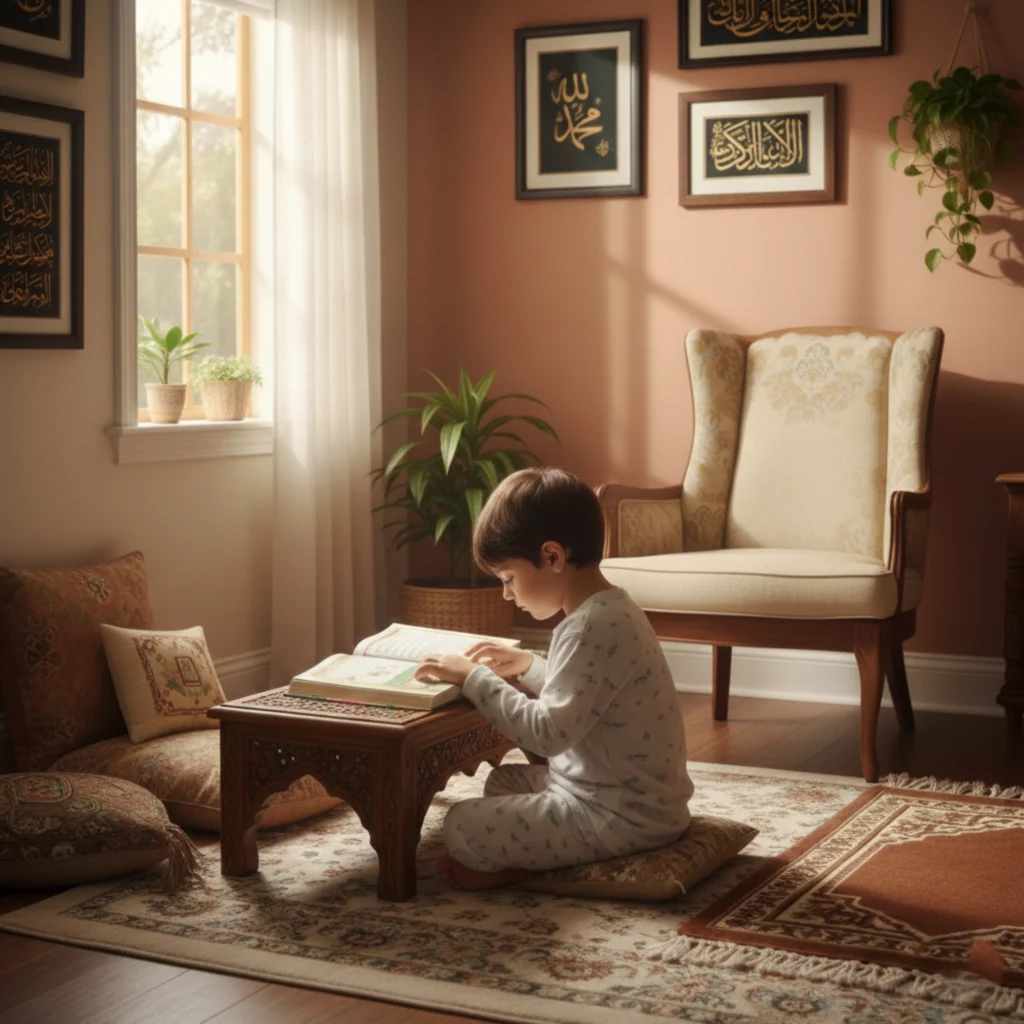
The Parent’s Role in Encouraging Kids to Learn Quran
Parents shape the emotional environment more than they realize. Even your facial expression matters.
Think about this: if a child sees you approach Quran time with calm and respect, they mirror it. One father mentioned that once he started sitting nearby reading his own Quran-even silently-his daughter became more consistent. No lectures needed. Kids watch more than they listen.
Creating a Positive Home Environment for Quran Learning
A perfect setup isn’t required. Honestly, most homes don’t have one.
What helps is familiarity. Same time, same place, gentle rhythm. One family found that moving Quran time just after Maghrib (instead of late evening) reduced resistance completely. Timing matters. Mood matters.
Making Quran Time Feel Safe and Stress-Free
Mistakes will happen. That’s normal.
When corrections feel sharp, confidence drops fast. Try letting your child finish first, then gently guide. Many parents notice kids relax when they’re not interrupted every few seconds (and suddenly, they try harder).
Ways to encourage children to learn the Quran according to their age.
As children develop the motivation evolves. What would be working at five, will not be working at ten-not a worry.
Young children enjoy coziness and monotony. A smile, a nod, a soft voice. Older kids want respect. One parent said giving her son a choice-“Do you want to read now or after dinner?”-reduced daily arguments. Choice creates ownership.
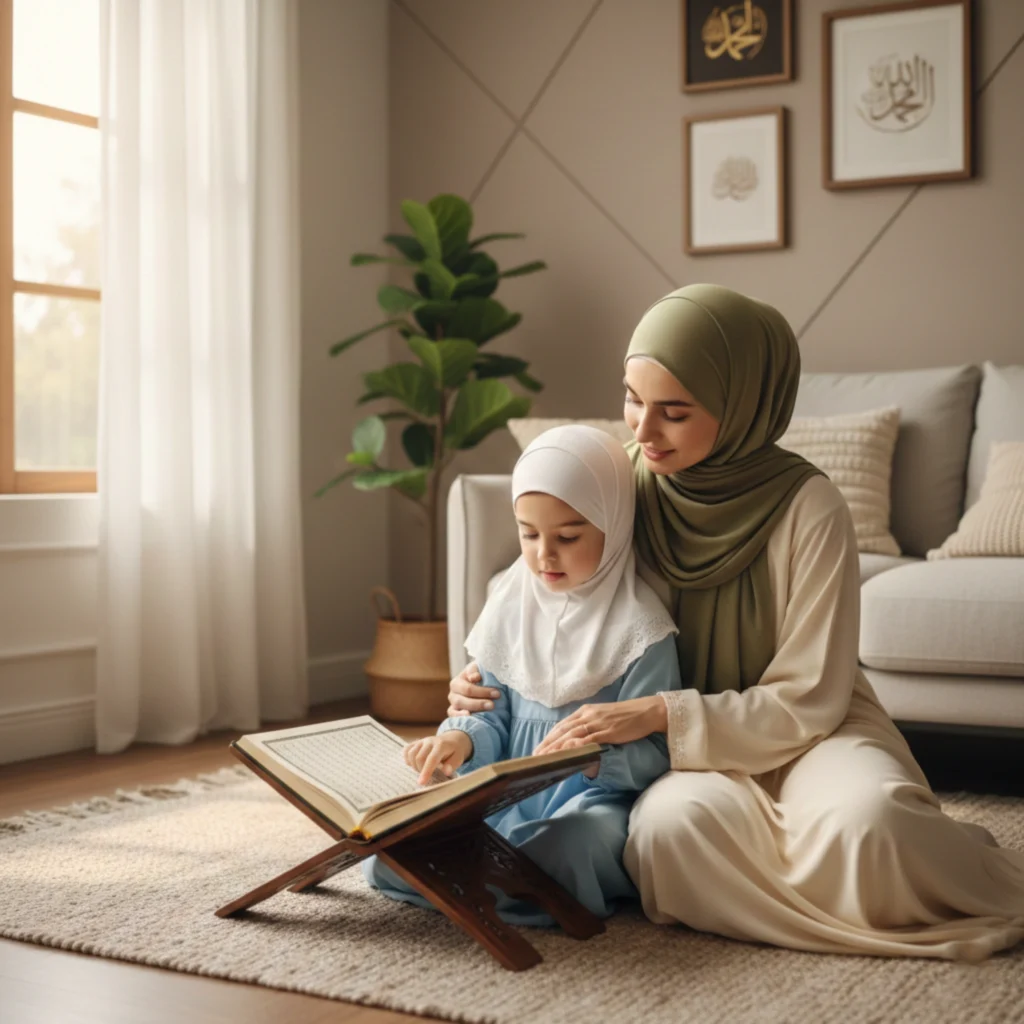
Teaching Quran with Love Through Small, Consistent Steps
Big expectations can quietly overwhelm kids. Small steps feel doable.
One page. Even half a page. Consistency builds trust. Not all days are going to be made–life has its way-but coming back at a slow pace is more important than being right. Does not mean that progress has to be obvious.
Positive Reinforcement to Enhance Children Reading Quran.
Rewards do not necessarily encourage-Often, words work better.
“I noticed you tried even when it was hard.” That kind of comment sticks. Over time, children begin to associate Quran learning with confidence and emotional safety, not performance anxiety. And yes, that shift takes time.
Building Emotional and Spiritual Connection with the Quran
Connection grows when meaning feels reachable. Kids don’t need deep explanations-just honest ones.
A simple “This ayah reminds us to be kind” is enough sometimes. One parent shared that listening to Quran together in the car became their most peaceful learning moment. No pressure. Just presence.
Choosing Supportive Quran Learning Options for Kids
Teachers matter. A lot.
A patient teacher who understands children can change everything. Many families find that one-on-one Quran classes give kids space to ask questions without fear or comparison. Communication helps too-parents and teachers staying aligned makes learning smoother.
Common Challenges Parents Face-and How to Handle Them Gently
Resistance doesn’t mean failure. It means something needs adjusting.
Is your child tired? Distracted? Overloaded? One mother realized her son’s reluctance wasn’t about Quran at all-it was exhaustion after school. Shortening sessions solved it. Sometimes the solution is simpler than it seems.
Long-Term Benefits of Encouraging Kids to Learn Quran with Love
Children taught with gentleness often return to the Quran later-by choice.
They don’t associate it with fear or pressure. They associate it with comfort, guidance, familiarity. Beyond recitation, this approach nurtures patience and reflection. Those traits last far beyond childhood.
Final Thoughts for Parents on Quran Learning for Kids
You are also right far more than you think. Really.
Love does not imply that the instruction is going to be lower quality, but rather that the course is lit that endures. When seeking the heavy things To-day, stop. Reset. A soft style is like a slower style, but develops something more solid. And that’s worth it.
FAQs
Pause and observe. Often it’s fatigue, fear of mistakes, or pressure. Adjust the approach first.
Short, focused sessions work best. Even 10-15 minutes can be enough.
Occasional rewards are fine, but emotional encouragement lasts longer.
Not at all. Steady, confident learning beats rushed memorization.
Yes. Listening builds familiarity, pronunciation, and emotional connection.