
Introduction – Why Play Matters More Than Pressure
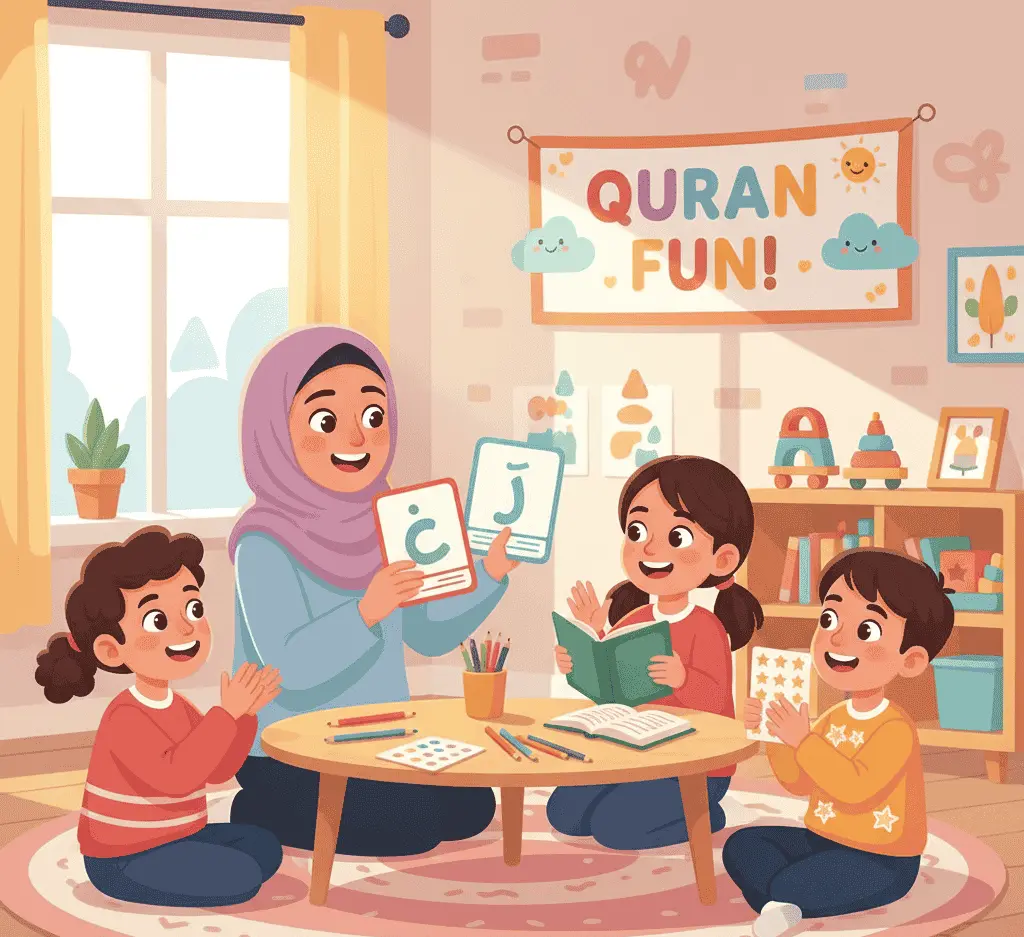
When children begin learning the Quran, the first memory we want them to carry is joy, not stress. Teaching the Quran to kids works best when it’s gentle, rhythmic, and matched to their natural curiosity. The methods that make them smile are usually the same methods that help them remember.
Across homes in Karachi, London, Sydney and New York, parents are discovering that fun Quran learning for kids – not rote repetition alone – builds a lasting love for recitation. This article gathers practical, tested activities and simple routines you can use at home or in online classes to make Quran learning lively and effective.
Why Fun Methods Work Best for Kids
Children learn by doing, by copying, and by play. A short, upbeat activity will stick much better than a long, silent lesson. When you teach Quran to children through games, you’re not replacing seriousness; you’re priming the heart and mind to accept it.
A few reasons these methods succeed:
- Play lowers anxiety and invites repeating practice.
- Movement, music, and color help memory through multiple senses.
- Peer or family involvement turns learning into a shared celebration, not a chore.
Creative, Practical Activities to Teach Quran to Kids
1. Flashcard Games (Letters & Sounds)
- Use Arabic letter and simple word flashcards.
- Turn it into a memory game: show a card, say the sound, make your child repeat it, then cover and ask them to find the same card.
- Keep it short – 5–10 minutes is enough.
Why it works: Repetition + play = pronunciation muscle memory.
2. Singable Surahs & Rhymes
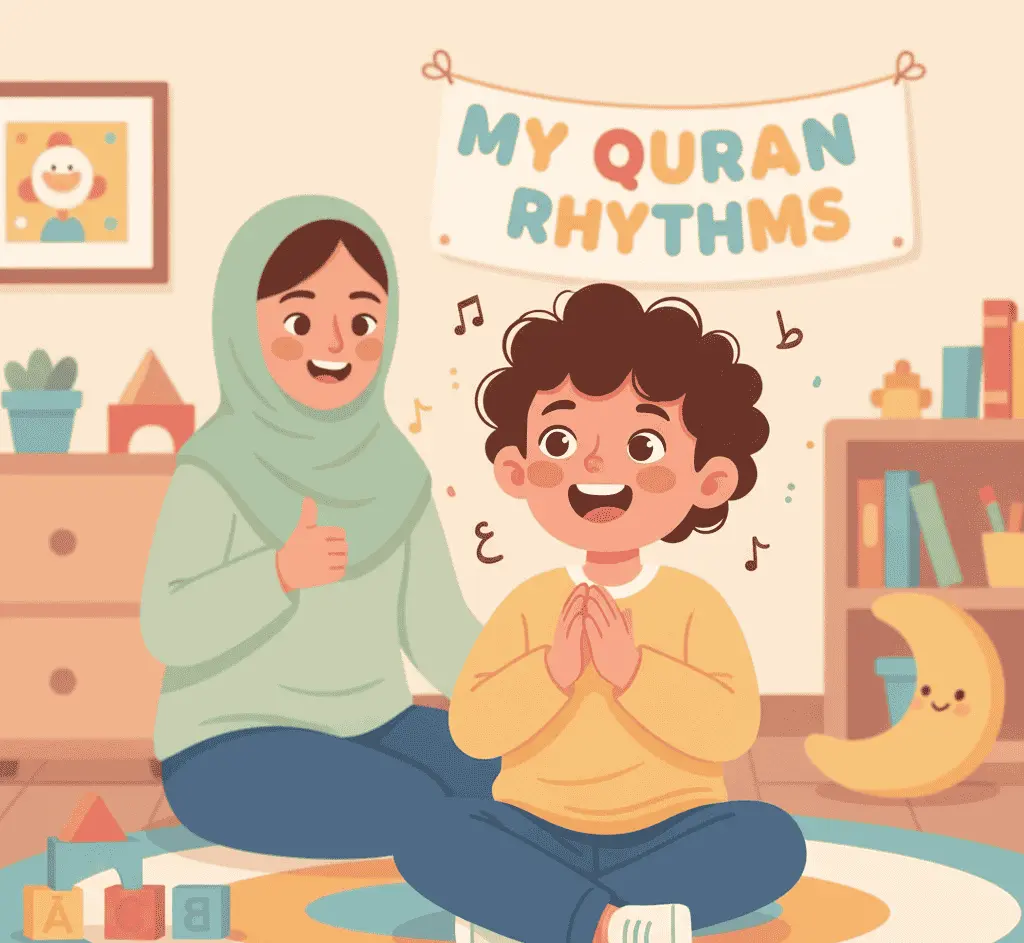
- Turn short surahs (like Al-Fatiha, Al-Ikhlas, Al-Falaq, An-Nas) into gentle chants or rhymes.
- Keep the melody simple so it’s easy to repeat.
- For toddlers, use clapping to mark rhythm.
Why it works: Melody anchors memory; kids mimic tune and words together.
3. Color-Coded Tajweed Pages and Apps
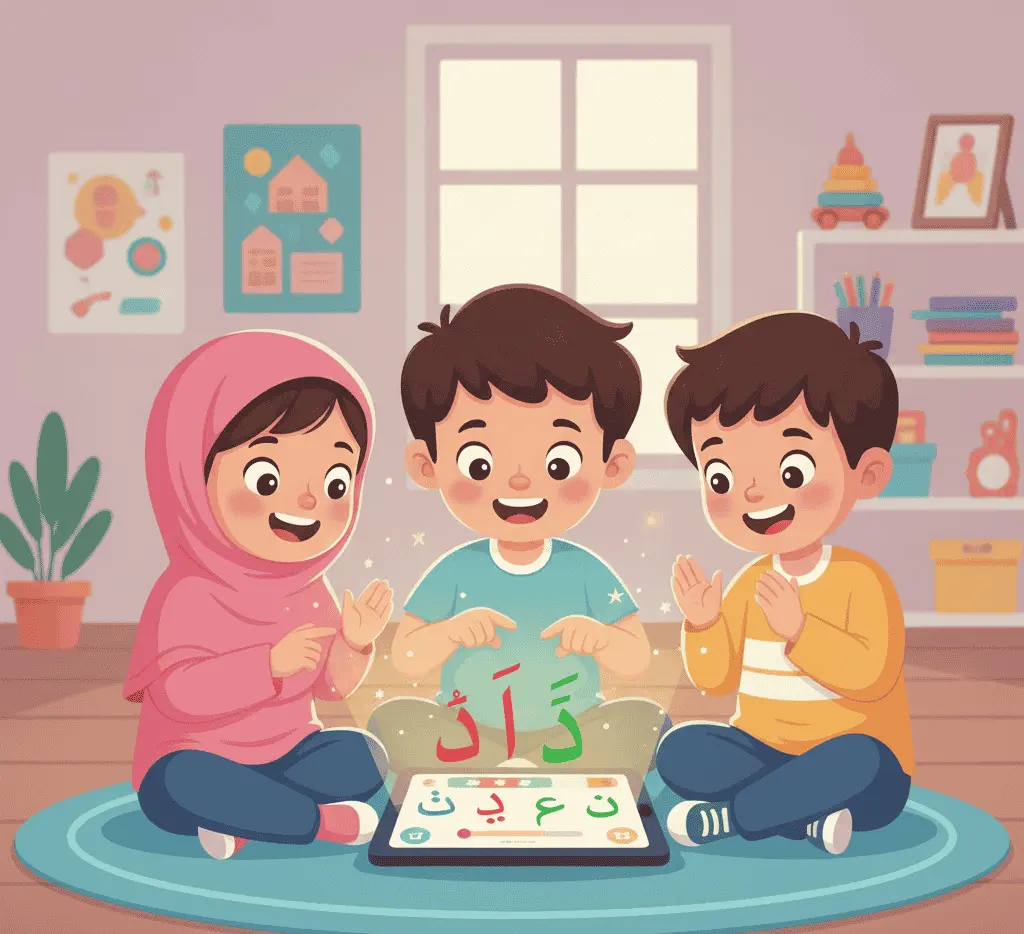
- Use a child-friendly Mushaf or app where tajweed rules are highlighted by color.
- Teach children to track the letters with one finger and repeat rules with easy words (e.g., “soft sound” or “long sound”).
Why it works: Visual cues reduce strain and make rules concrete.
4. Repeat-and-Echo (Micro-Sessions)
- Read one short line, have your child repeat it two times.
- Limit preschoolers to 8–12 minutes. Increase gradually as attention improves.
Why it works: Micro-repetition avoids overwhelm and builds accuracy.
5. Storytime with Meaning
- Turn the meaning of a short surah into a simple story.
- Example: explain Al-Ikhlas in two sentences that children can relate to. Then recite the surah and let them repeat.
Why it works: Understanding meaning makes words alive, not just sounds.
6. Flashcards + Stickers = Mini Milestones
- Create a progress chart where each completed surah earns a sticker.
- Celebrate weekly with a reward: a sticker, a bookmark, or extra storytime.
Why it works: Positive reinforcement encourages steady practice.
7. Role Play & “Teach Back”
- Let children “teach” a surah back to a parent or sibling.
Why it works: Teaching is the ultimate test of understanding.
8. Interactive Group Practice
- With two or three children, create group drills.
- One child reads, the others repeat.
- Add playful applause for effort.
Why it works: Peer learning increases motivation and reduces pressure.
Quick Tech-Friendly Tools (Online or At-Home Use)
- Audio loops & slow playback: Let kids listen to a reciter at slow speed, then repeat.
- Simple apps for kids: Use apps with color-coded text, short lessons, and recording features.
- Video classes: Choose Quran classes for kids with live, short sessions (15–25 minutes) and interactive activities.
A Gentle Daily Routine That Works
You don’t need hours. Try this simple schedule:
- Morning (5–15 minutes): A fresh, new micro-lesson (one or two lines).
- Later day (5–10 minutes): Playful revision (flashcards, a song).
- 2–3x weekly: Live short class with a teacher or family practice.
- Weekly: Sticker review and positive reinforcement.
⚖️ Consistency beats intensity. Ten minutes daily is more effective than a three-hour session once a week.
Parenting Style That Works (Not Drill-Sergeant Parenting)
- Praise clarity and effort, not speed.
- Keep sessions short and predictable.
- Sit with your child and be present.
- Avoid comparisons; every child has their own pace.
Choosing Online Quran Classes for Kids – Checklist
Look for:
- Live one-to-one or small groups with patient teachers.
- Short sessions (15–25 minutes).
- Child-friendly materials: color-coded pages, games.
- Recording feature for parent review.
- Positive teacher-parent communication.
Common Problems & Easy Fixes
- Loses focus quickly? Shorten sessions, add movement breaks.
- Forgets verses? Add a 5-minute review before bed.
- Gets discouraged? Focus on praise: “That was so clear!”
- Tech issues? Keep a backup Mushaf or offline audio.
FAQs – Quick Answers for Busy Parents
As soon as they can sit and mimic sounds comfortably – often from 3–4 years.
Young children: 8–12 minutes. Older children: 15–25 minutes.
Begin with clear sounds. Full Tajweed can come later.
Yes – with short live lessons and feedback from a qualified teacher.
Conclusion – Small Joys, Big Results
Teaching Quran to kids is not about drilling – it’s about inviting. Fun Quran education helps children carry the words in their hearts while building confidence and good habits.
Through short daily rituals, playful activities, and kind teachers, you’ll see steady progress. Over time, these joyful steps create a strong and lasting relationship with the Quran.
Enroll now to get your kids a free trial. Click here